The Last Real Place

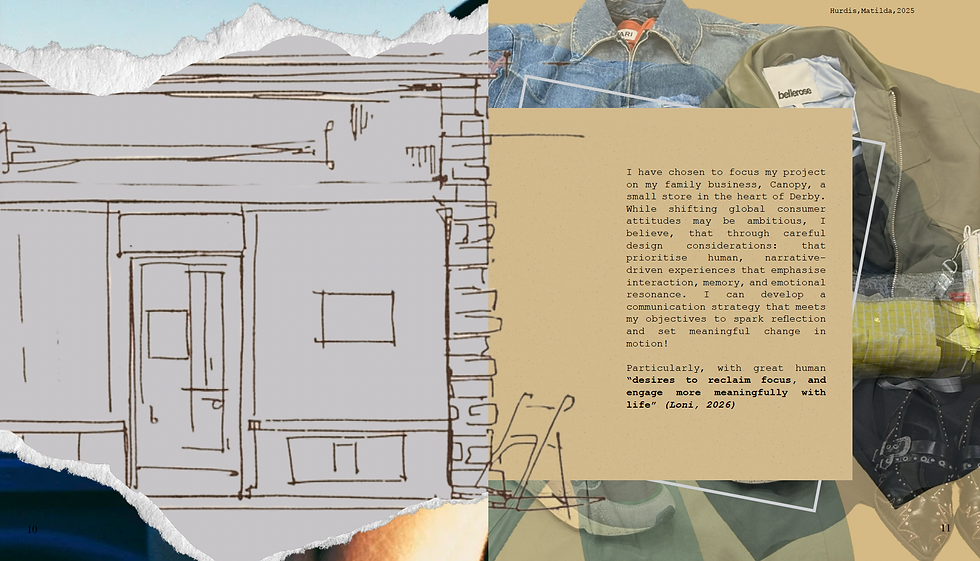
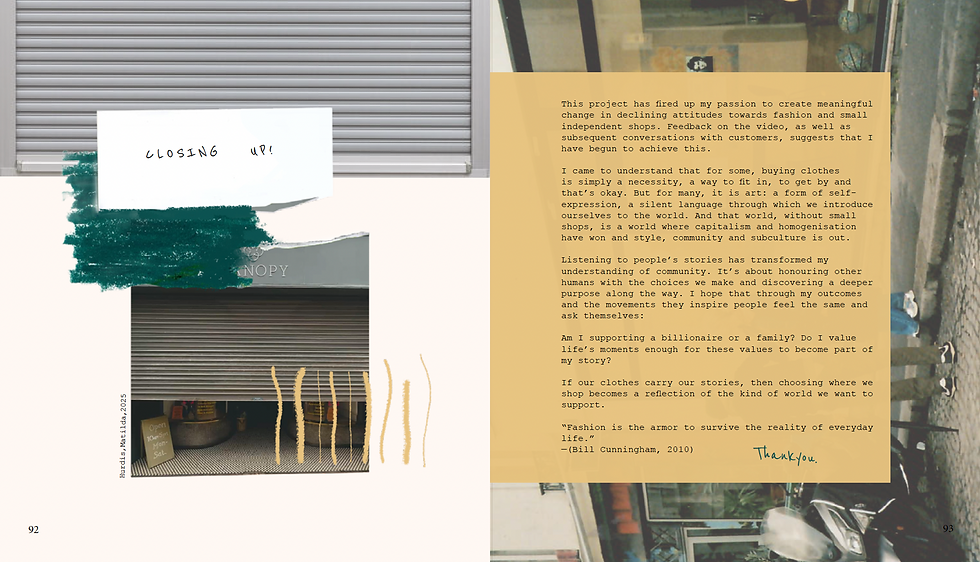
“The Last Real Place” was a publication I made exploring the decline around small shops and meaning of style within the fashion landscape.
Individuality and style once held cultural significance. Buying a new fashion piece wasn’t merely a transaction but an experience, a way to express identity, a holder of memory. “The Highstreet was a cultural hub that leant itself to connection. A place of interaction, discovery, and community.”
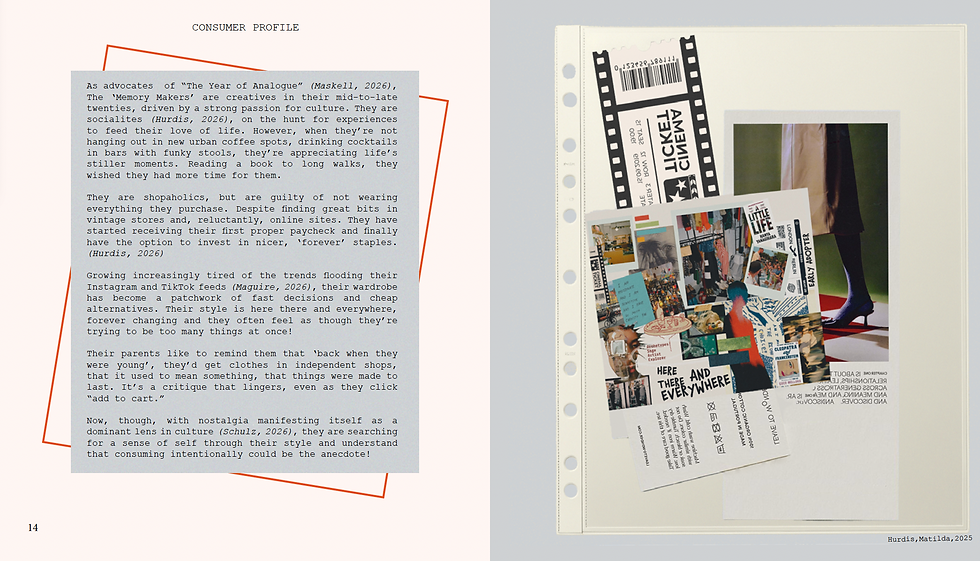
But the rise of online shopping, the decline of independents and endless accessibility has diluted that value, fostering a post-modernistic culture where the majority chase the same look. After exploring hauntological, economic, and most profoundly, the emotional forces that have indirectly shaped a generation of unconscious consumers. My research led me to the problem that “Independent retailers face challenges engaging modern shoppers who navigate a fragmented fashion landscape, yet still seek individuality.”


In the publication I aimed to create tangible outcomes that resonated with my target audience and effectively communicated my message of choosing small independent businesses over homogenised mass market sameness! These outcomes were supported by a comprehensive marketing communications plan with proposed success measures to connect with and captivate my target audience, ensuring maximum impact.
The final promotional strategy of this project took the form of a pop up (with takeaway promotional advertising) followed by a launch to a campaign video series and social media amplification.
The primary outcome is a series of small-scale, shed-sized pop-up installations located in culturally active urban areas surrounding Derby. Hockley, Nottingham, Lichfield city centre, and Queens Road in Leicester, positioned near independent cafés and bars to ensure high audience relevance and visibility.
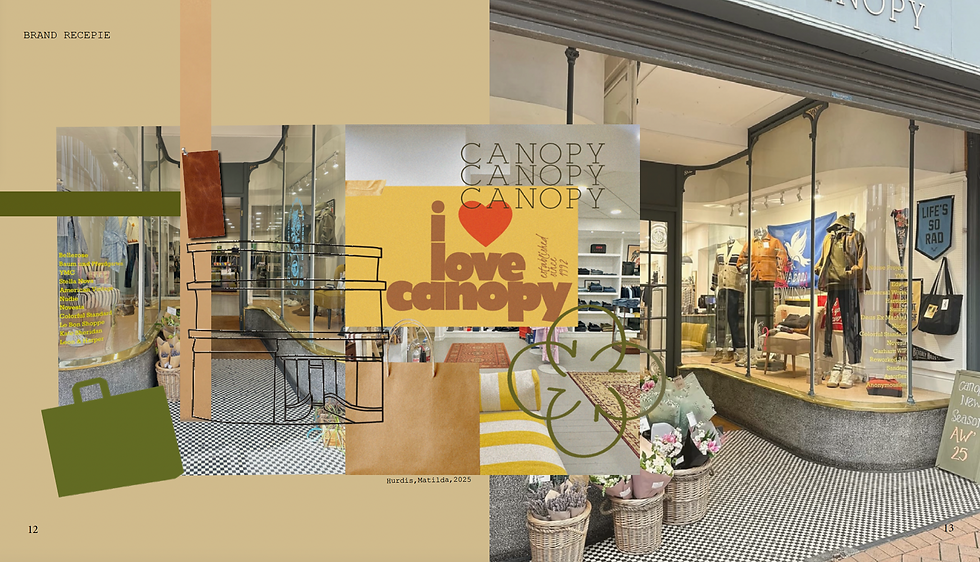
These temporary spaces are designed to be instantly recognisable as welcoming shop fronts. Staffed by two friendly brand representative’s, members of the public are engaged in human conversation about Canopy and are encouraged to go inside.
Functioning as interactive, exhibition-like paper shops, the installations are instantly engaging, especially to the consumer who appreciates the value of experience and craft. This is supported auditory with an ambient audio playing muted domestic sounds, alongside reflective questions voiced by speakers of varying ages.
“Which item in your wardrobe knows the most about you?”
“What moment do you wish you’d dressed with more care?”
“Do you support small family businesses?”
“Have you ever brought something from a small shop?”
Visitors are invited to respond using handwritten tags and pins, collectively producing a visible archive of personal stories. Visually, this builds a beautiful metaphor for the stories that a small shop nests. We can observe the success of sensory experience in retail through Jacquemus’ ‘Le Bleu’ installation at Selfridges, which was a significant step in the brand's expansion .
This experiential outcome operates as a moment of pause, that the consumer craves, while a printed takeaway postcard and branded sticker extends the experience, directing participants to Canopy’s website, social platforms, and physical store. I think people will read other people’s stories, framing clothing as deeply meaningful.
This activity is followed by the launch of a video series, “What I Wear In The Life I’m Given,” the first phase of a wider campaign rollout, which will be reached with increased footfall post the PR activation.
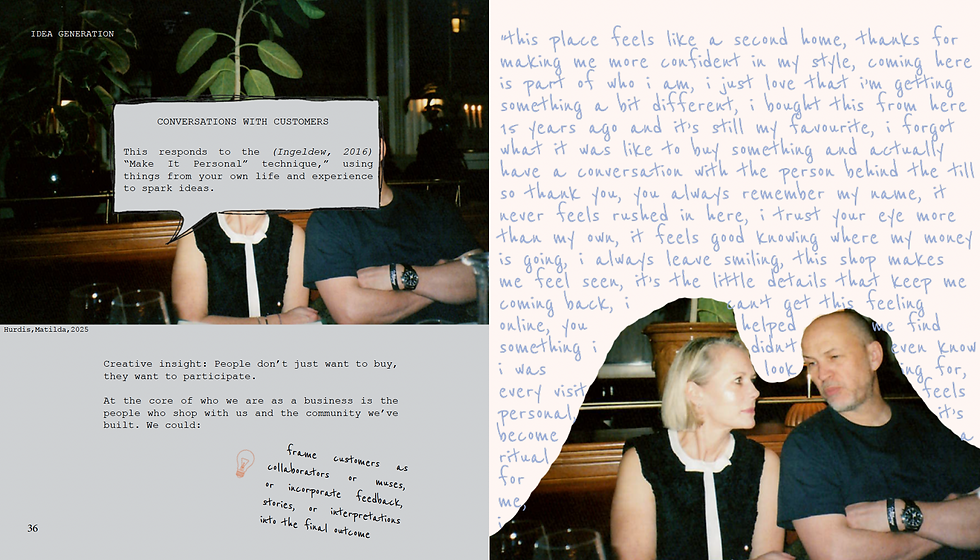
It will launch on Instagram and TikTok, the consumers most used social platforms, and will unfold over multiple episodes. Each video functions on an emotional, human level, using a reflective audio with real customer narratives. It speaks on the role clothing has across different moments of life, inviting contributions for upcoming editions.
Connected to Canopy, the series encourages audiences to internalise these values and distinguish what small shops stand for compared to where they, potentially, currently shop. Shot in an intimate, home-video style, the content highlights what matters most to people; friends, family, work, sport, and everyday life.
Featuring both staff members and loyal customers, the videos puts authentic human faces to the brand, reinforcing trust and relatability.
This approach allows the campaign to evolve through diverse stories while maintaining a consistent emotional and strategic thread and consumer involvement. So, the route to consumer is essentially:
physical experience, digital and in-store engagement, community participation and potential conversion.
My tertiary outcome is the social media strategy. From teasers to reminders, Canopy socials will accompany us on the journey sparking curiosity and conversation.
The campaign will encourage reposts off our current customers/followers. People tend to associate with others who share similar values, tastes, and lifestyles, a principle known as ‘homophily’ in sociology and ‘Consumer Culture Theory’. Therefore, we hope it will reach and invite, the right, new people into our Canopy world!
The expected impact of these outcomes is of course, to encourage footfall and slow, sustainable brand growth for Canopy. But to also initiate conversations around where people CHOOSE to shop and how it reflects the kind of economic and social impact they wish to have.