



During this research project my objective was to thoroughly discover trends, drivers, and theories to underpin my observation of depreciating attitudes around small business, fashion, subculture and style.
I split my research up into four main sections.
-
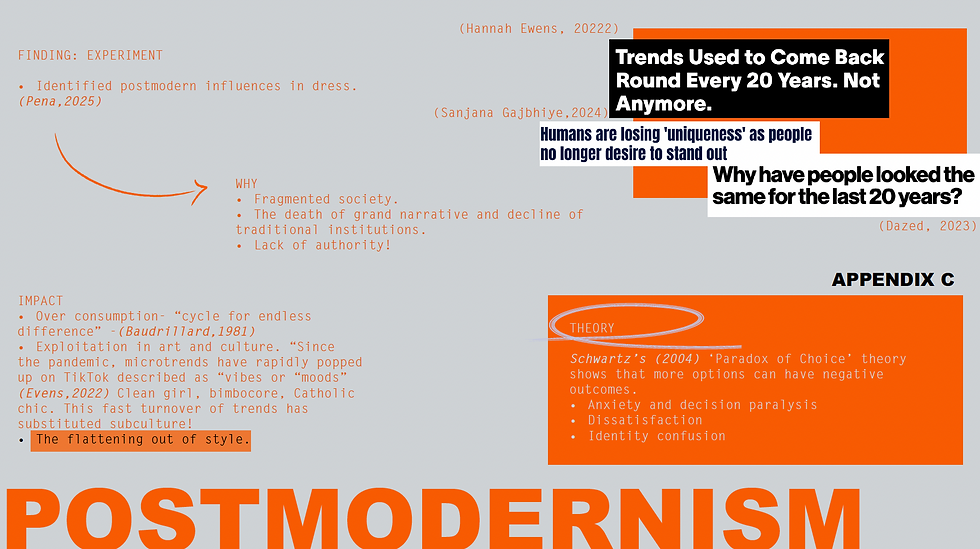
Postmodernism and the death of the grand narrative- How this has affected western style. Ultimately in modern culture most people don't have things to follow, with political and economic distrust. Which in one view is great, as people are free, they have more choice and opportunity for self-expression. But ultimately, people then try and be too many things at once, destroying the meaning of what things once connotated. As a result we live in a world of sign!
-
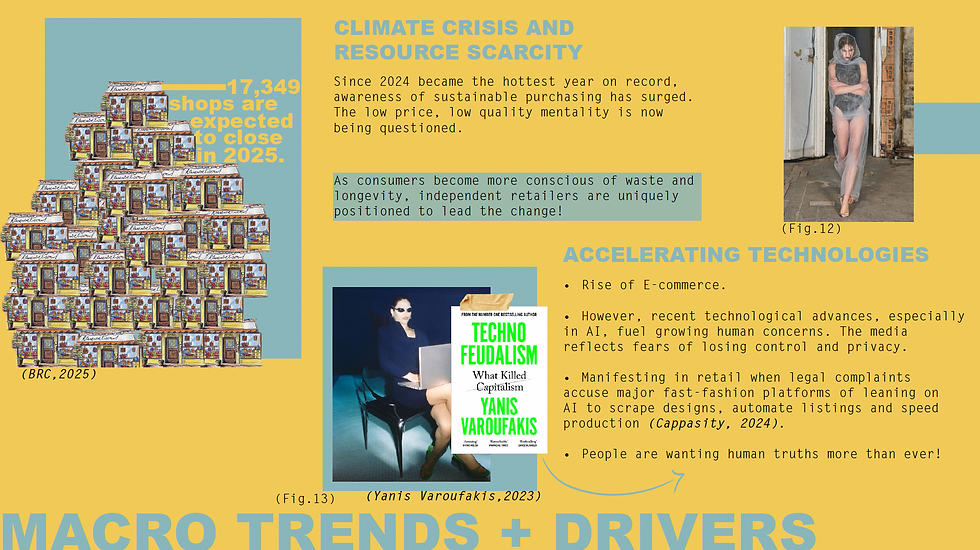
Hauntology- in the 21st century there are suggestions that young people feel there is no future. With a lot of uncertainty about where young people see themselves there seems to be a lack of evolving culture, something so vital to the retail landscape. The masses mimic styles from generations and subcultures before us with little to no understanding of its cultural or social value. This means there is declining importance and meaning in dress and therefore the experience around consumption.
-
French distaste- Unlike France, which upholds strong cultural protections for small shops and craftsmanship, the UK's embrace of globalise fast fashion has resulted in the neglect of independents and wardrobes dominated by clothes designed for rapid replacement rather than longevity. However. England often follows the Europeans in trend. Seeing their way of life as 'chic providing an opportunity to challenge the dominance of fast fashion and re-establish cultural value in independents.
-
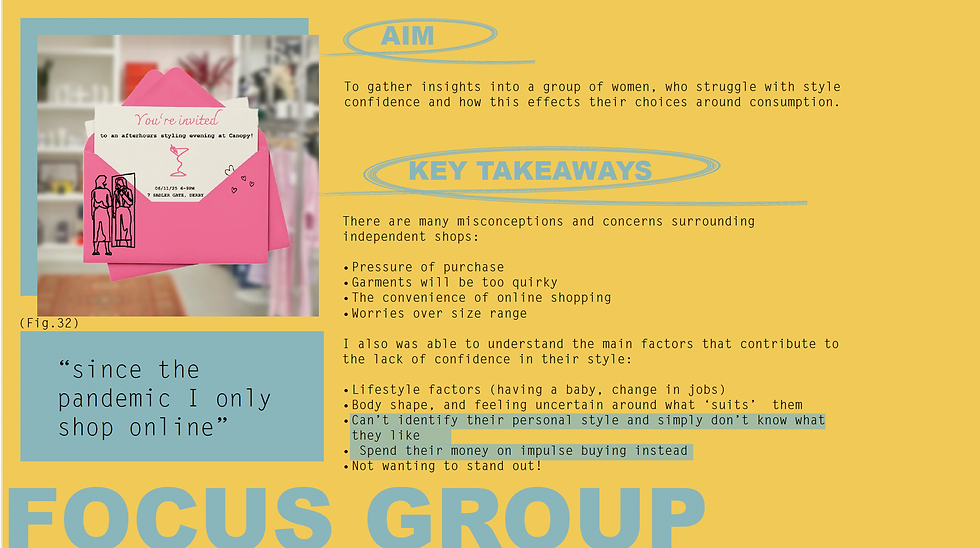
Shopping small and mental health- Studies show that people who shop small actually have a stronger sense of self and identity! They are crucial to the fashion landscape in terms of individuality and meaning.